
#004 / MY SETUP
One Umbrel, two pools and a miner crew with character
My little Bitcoin corner has grown into quite a crew: a node, two local pools and miners with names that sound like the cast of a slightly nerdy sitcom. Satoshi is hashing, Difficulty is doing its thing, and Ledger is on duty. Everyone has a job. The block is still free to make a dramatic entrance.
This is a tour of my own setup: Umbrel Home as the base, Bassin for a tidy worker overview, and pogolo for some native Stratum V2 fun. Screenshots, favourite hardware and a naming system that keeps the crew from becoming a guessing game.
The little box holding everything together
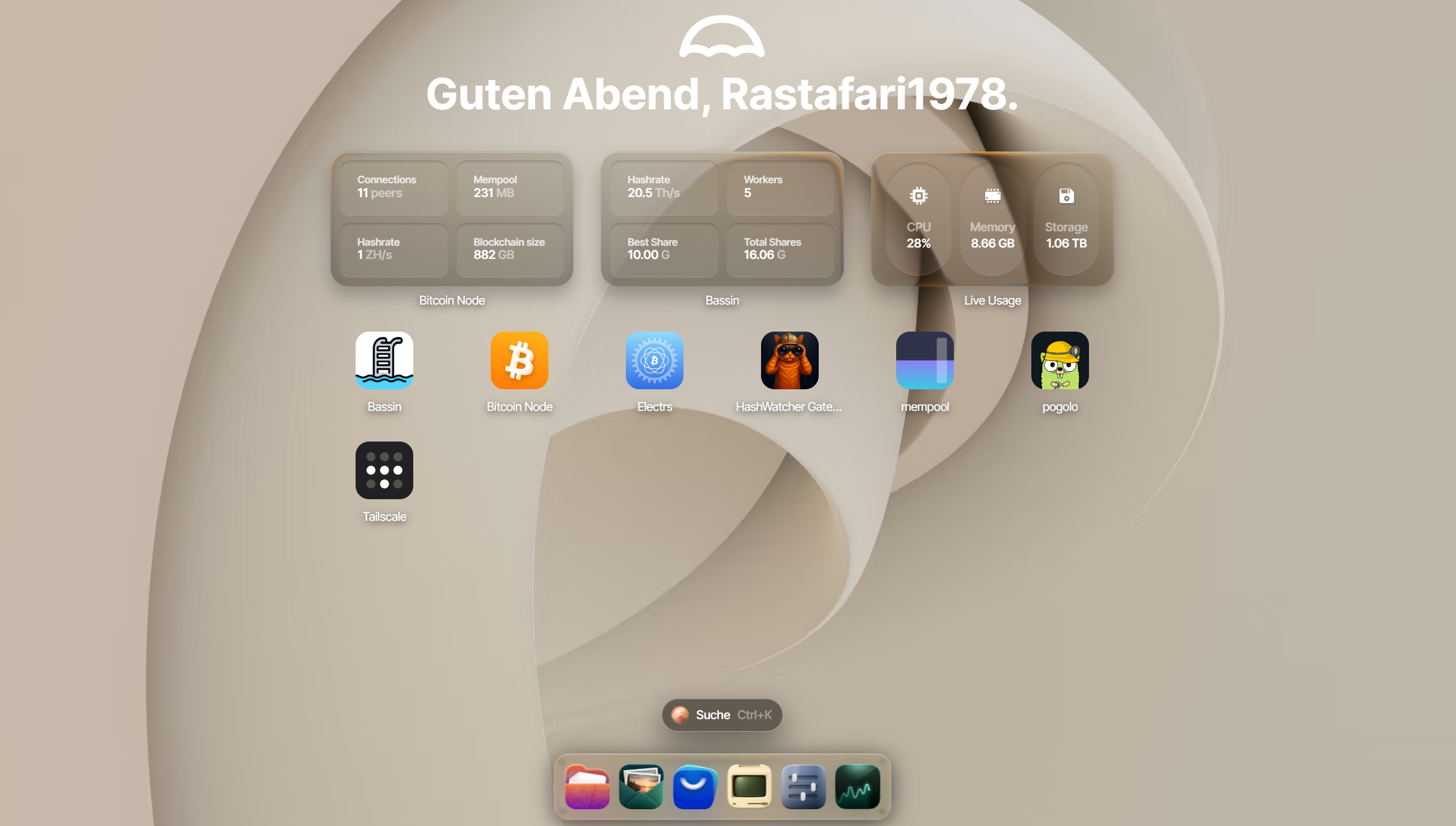
At the centre sits my Umbrel Home (2025), now updated to umbrelOS 2.0. The device information shows an Intel N150, Intel integrated graphics, 16.5 GB LPDDR5 memory and a 4.06 TB NVMe SSD. Plenty of room for my Bitcoin corner to stretch its legs.
My Bitcoin desktop, neatly assembled
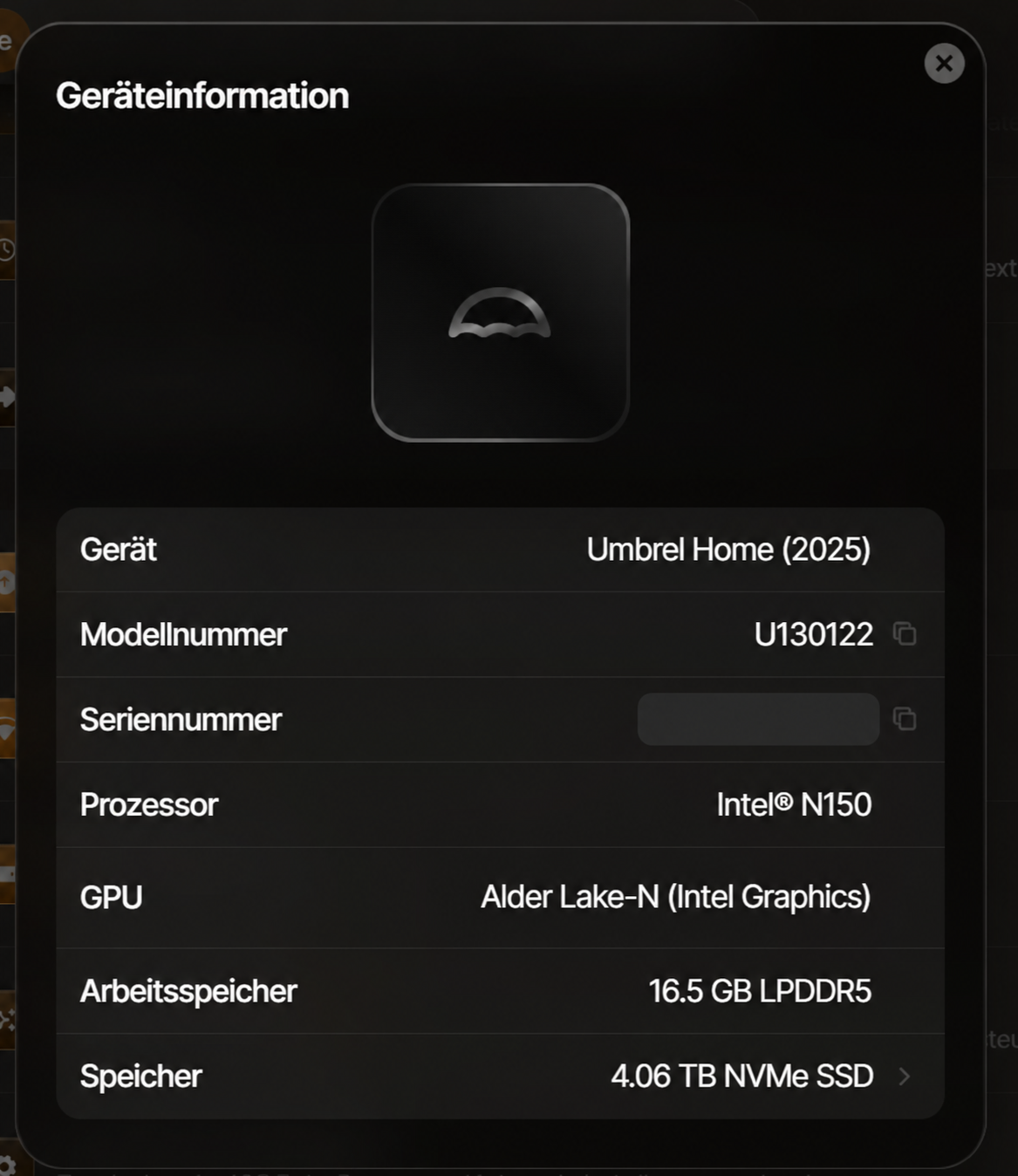
Installed here are Bitcoin Node, Bassin, Electrs, HashWatcher Gateway, mempool, pogolo and Tailscale. Bitcoin Node supplies the Bitcoin foundation, Electrs indexes blockchain data for compatible clients, mempool gives me a view of the network, and HashWatcher Gateway helps me keep an eye on the mining crew. Tailscale rounds out my own access setup.
Both pool applications are connected to the same Bitcoin Core 31.1.0 node in my setup. Bassin and pogolo talk to the node, while my miners talk to their chosen pool. Running two pool applications gives me two different interfaces and protocols to explore. The hashing is still done by the miners connected to them.
Bassin: a tidy swimming pool for hashes
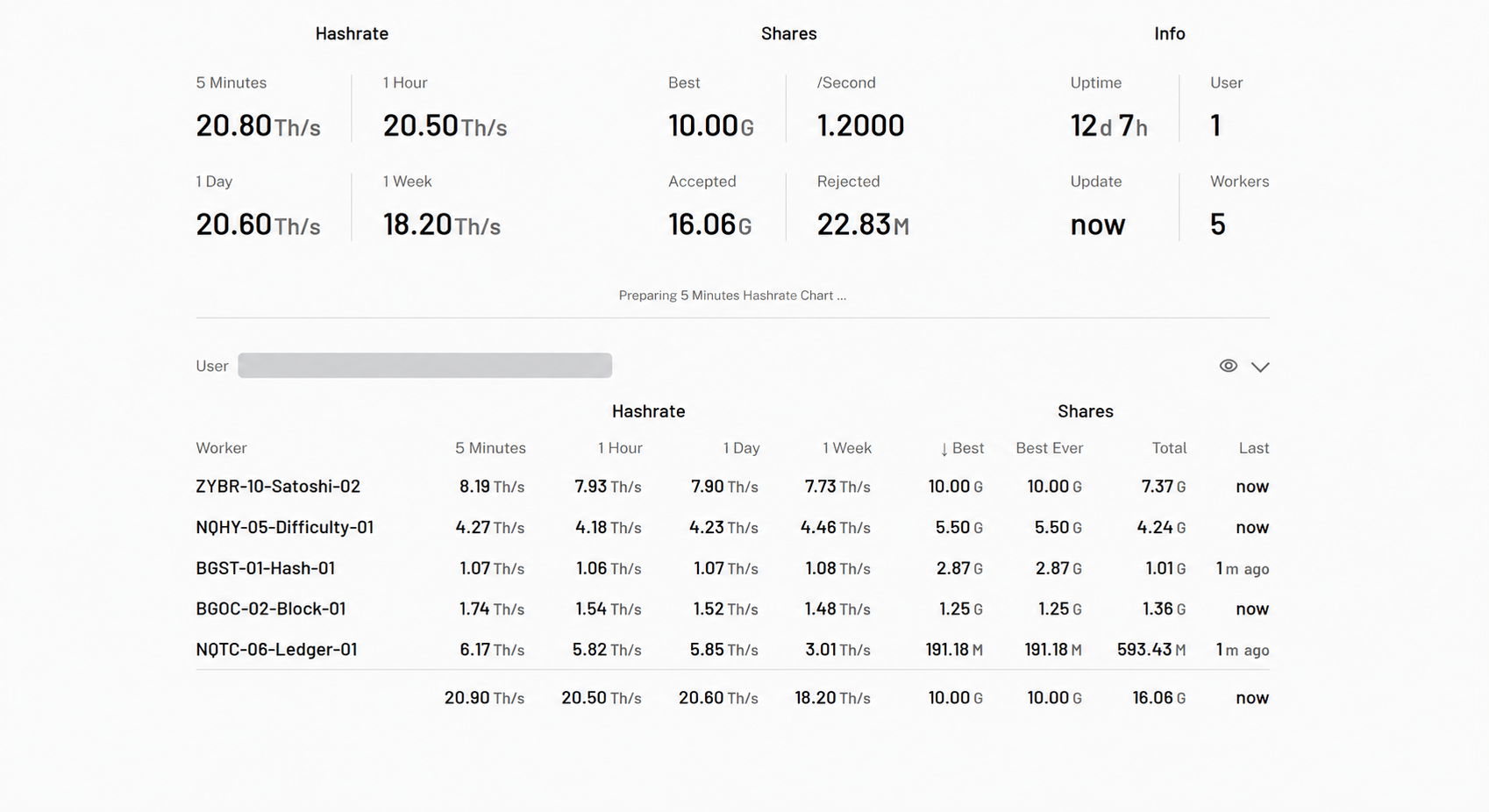
Bassin brings a ckPool-based solo-mining setup to Umbrel, together with a clean interface. Mine is running Bassin 2.1.4. I like how quickly I can see the workers, their hashrates and their best shares. A quick glance is usually enough to tell whether the crew is happily humming along.
A miner deserves a proper name
My system is simple: type abbreviation – TH class – Bitcoin-inspired nickname – unit number. ZYBR-10-Satoshi-02 means a Zyber in my 10-TH class, nicknamed Satoshi, unit number 02. The class is my own label for organising the setup; it is not a promise that the live hashrate will always sit exactly at 10 TH/s.
| Part | Example | What it means |
|---|---|---|
| Type | ZYBR | Zyber |
| TH class | 10 | My 10-TH class |
| Nickname | Satoshi | My Bitcoin-inspired name |
| Unit number | 02 | Second device of that type |
Satoshi, Difficulty, Hash, Block, Ledger, Taproot and HashZilla: the names practically picked themselves. The final number becomes useful as soon as a second device of the same type moves in. Which, in this hobby, seems to happen surprisingly easily.
pogolo: small interface, interesting machinery
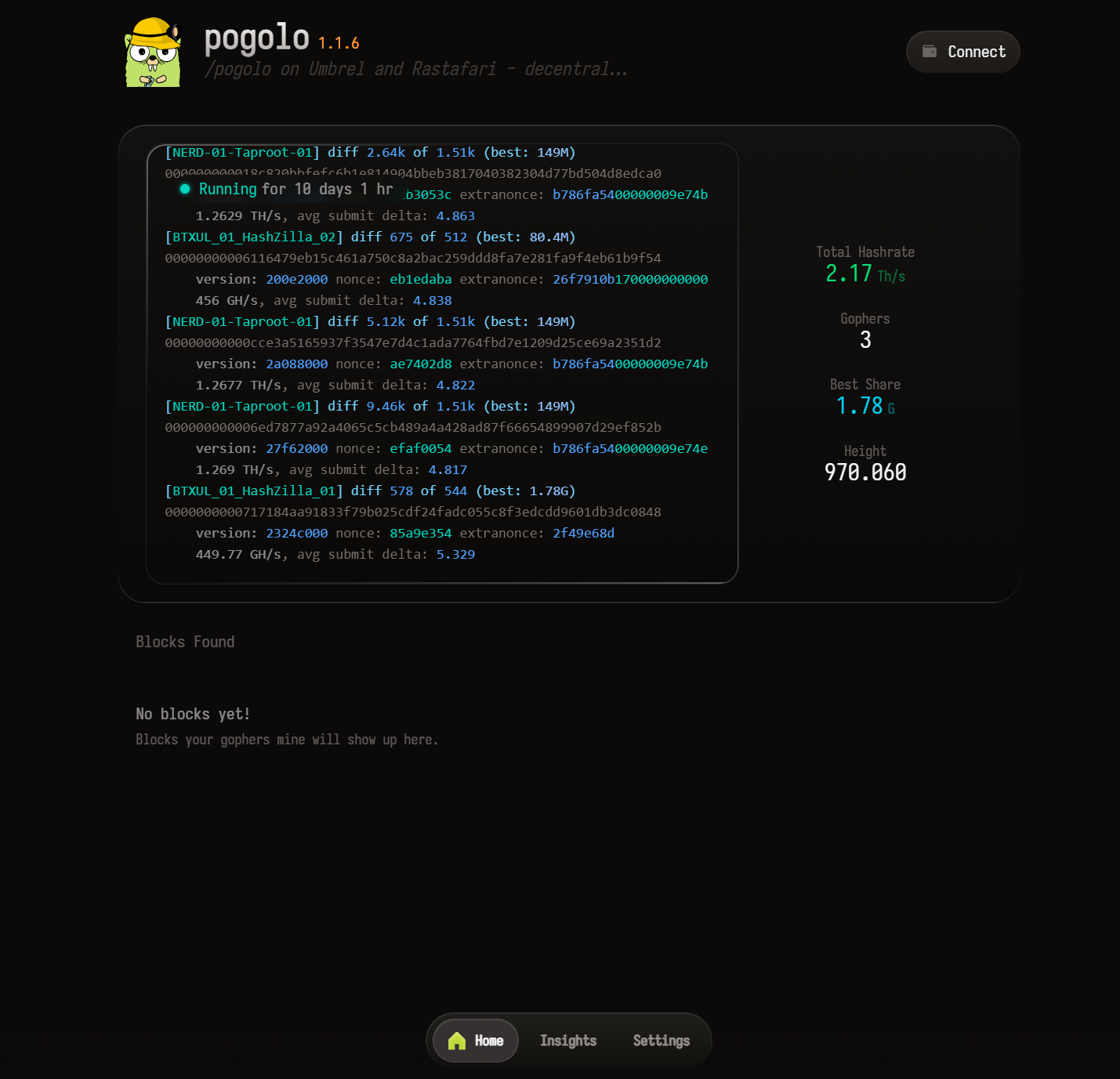
My second local pool is pogolo, here in version 1.1.6. Its compact interface is exactly my kind of thing: a stream of colourful logs, a few useful figures and very little fuss. The project is a Bitcoin-only solo pool intended for miners on a local network.
The feature that caught my attention is support for Stratum V1 and native Stratum V2 on the same port. I have two miners connected to pogolo: one uses SV1, while my Bitaxe Ultra uses native SV2 with its installed open-source firmware. That makes this a particularly interesting little playground.
The blue-lit favourite: my Bitaxe Ultra
This Bitaxe Ultra from TinyChipHub is one of my favourite miners. Its chip and hashrate have been overtaken by newer devices, but the clear acrylic case, visible board and LED lighting give it loads of personality. It has thoroughly earned its place on my desk.
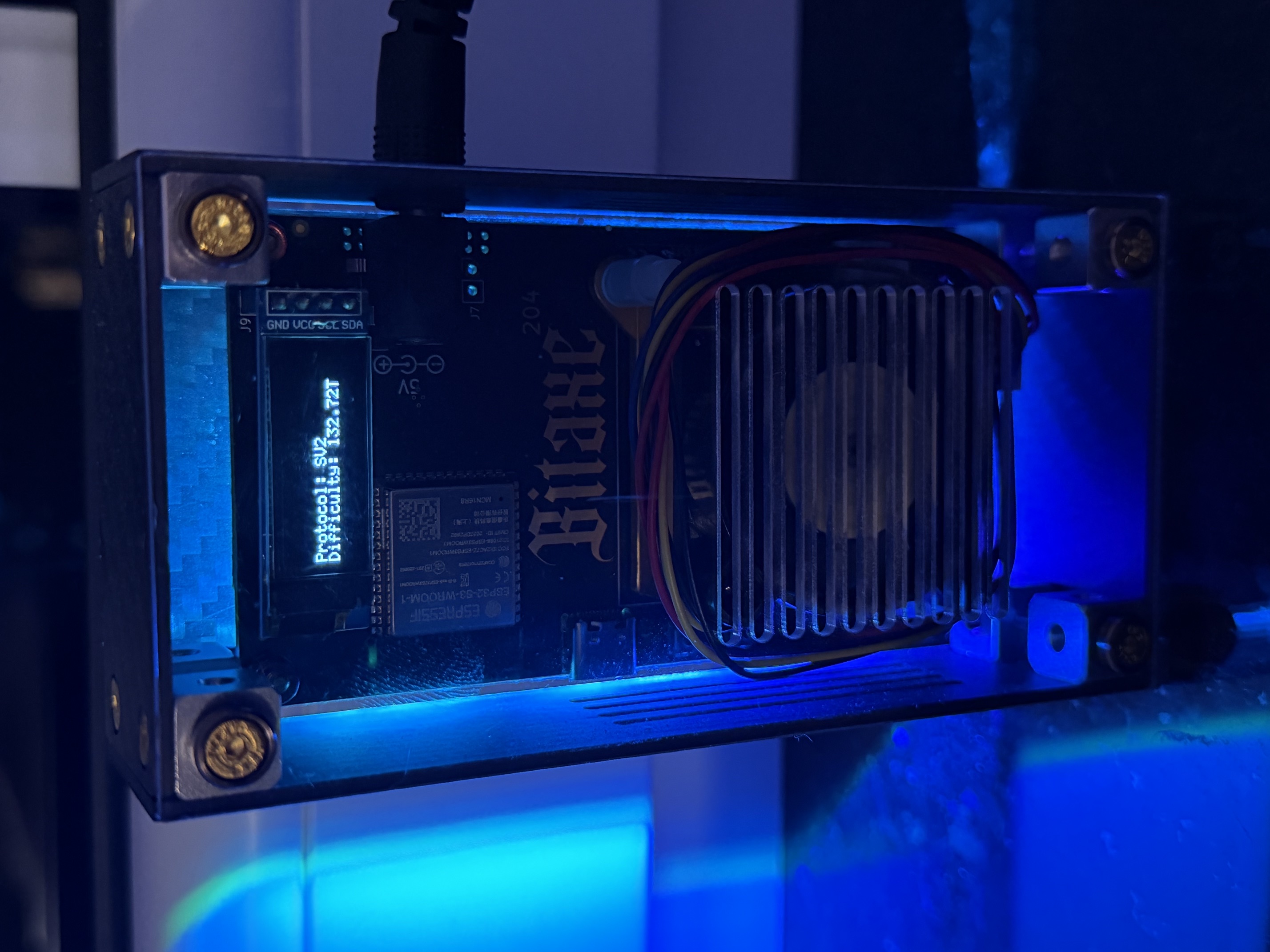
The display makes the protocol visible right on the device. Native SV2 support depends on the firmware and the pool implementation. It is an interesting way to explore the technology; it does not, by itself, give the miner more TH/s or guarantee a block.
One setup, plenty to tinker with
Bassin gives me the tidy overview, pogolo gives me another way to experiment, and Bitcoin Core holds the Bitcoin side together. The pleasure is in understanding my own setup, watching the crew work and finding the next small improvement. Good vibes, real hashes, and occasionally one more device than originally planned.
I also run another full-node setup. That deserves its own article, with its own screenshots and stories. For today, this is my Umbrel corner. Aloha, and happy hashing!